Slim Partitions That Divide Without Closing
The SHOJI system is built on T6-6063 aluminium profiles with a 3.5 mm wall — slim partitions that hold glass, light, and space in the same plane without visual bulk.
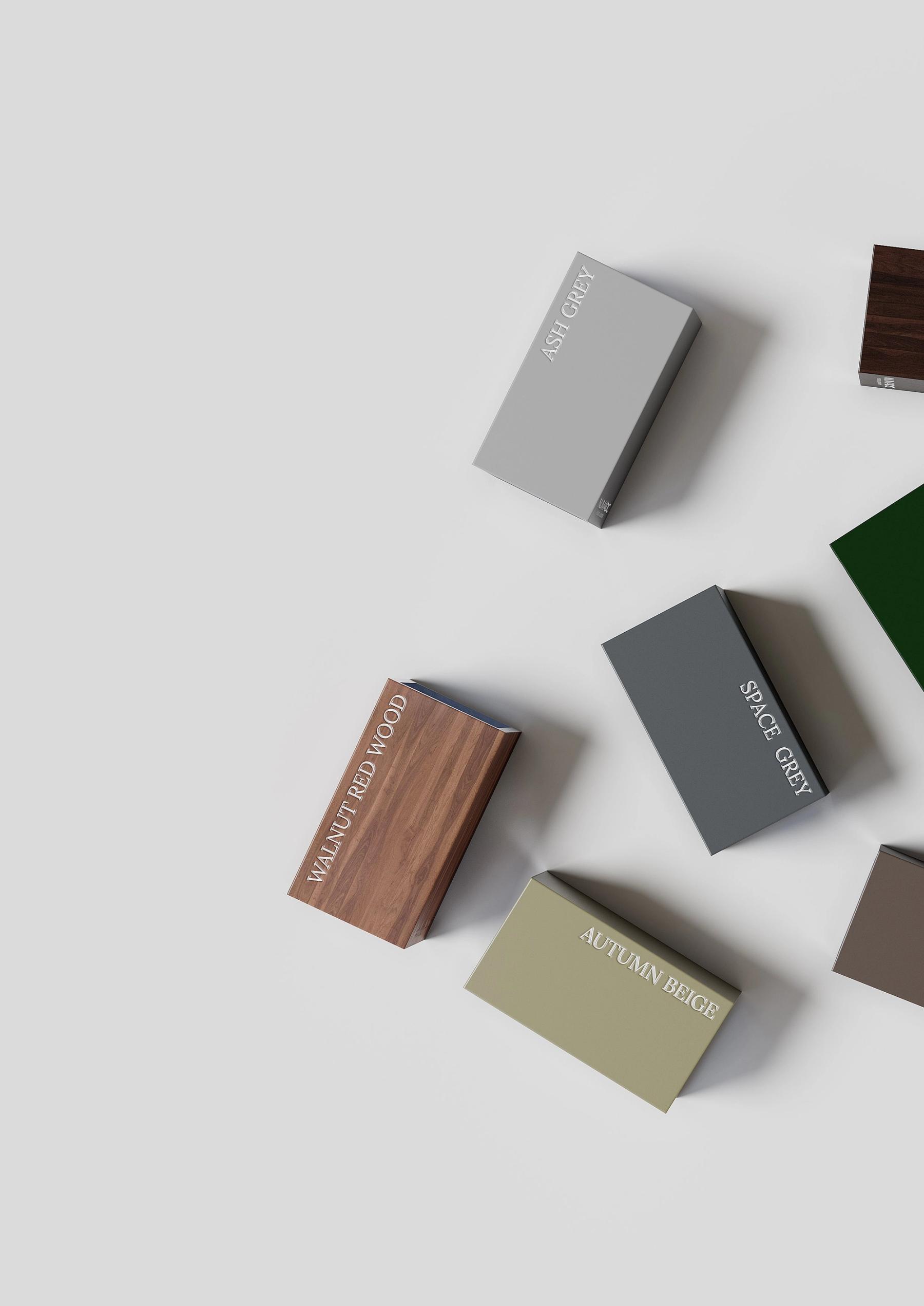
A 3.5 mm wall that holds a room apart
SHOJI is the NUMAEX partition system. Three profile families — Shoji, Shogun, and Suki — run as fixed screens, single and synchro sliding panels, telescopic sliding systems, dual-hinge doors, and sliding-plus-swing combinations. The aluminium profiles are extruded from T6-6063 alloy and held to a 3.5 mm wall, which is why the frame disappears at any reading distance and the glass becomes the partition.
The system draws on two Japanese design principles: wabi-sabi and ma — simplicity, and the value of empty space. Those are not decorative references. They are structural decisions about how much material to put in front of a room. A slim partition made on these principles divides without announcing itself, which is the point.
Grid designs — Ligne, Quadra, Rise, Arc, and ArcPro — set the rhythm of the screen. The grid is the only visible element at distance. Choose it carefully.
Soft-close, silent, and optionally motorised
Every sliding panel runs on a soft-close mechanism — a damper that catches the panel near the end of its travel and draws it shut smoothly and without sound. The motor, where specified, sits inside the track. The sensor, where specified, sits inside the track. Neither is visible from the room. Automation does not change the profile, the glass, or the grid; it changes only how the partition is operated.
Access options run from a standard handle to digital fingerprint authentication, motorised remote or switch control, and motion-sensor activation. The fingerprint option is specified most often for walk-in wardrobes and secure office cabins. The sensor option is specified most often for hotel corridors and healthcare settings where hands-free operation matters.
The top track is concealed in one of two ways. Where a false ceiling or ceiling groove is available, the track disappears into it and the panel appears to rise straight from the floor. Where no groove exists, a slim pelmet covers the track from the front.
The motor sits inside the track — automation never compromises the slim, minimal look of the system.Engineering note, SHOJI
The infill determines everything the partition does
Six glass families are available: extra-toughened clear, fluted (vertical ribbed texture that blurs the view while passing full light), Masterline fine-line decorative, bronze, grey and clear tinted, fabric-laminated, and metal-mesh-laminated glass. The laminated options — fabric or woven metal mesh bonded permanently between two panes — add texture and privacy and hold together if broken.
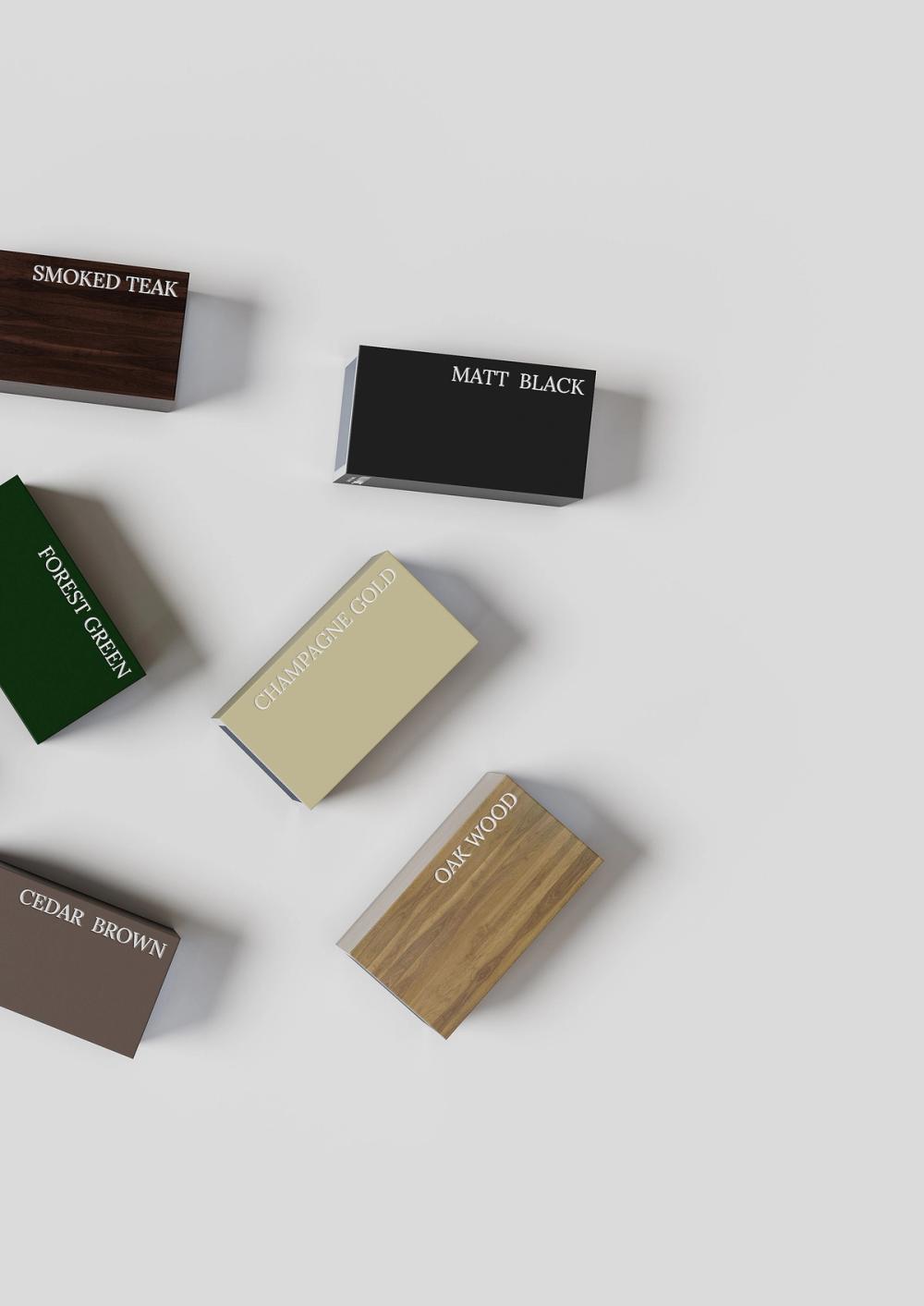
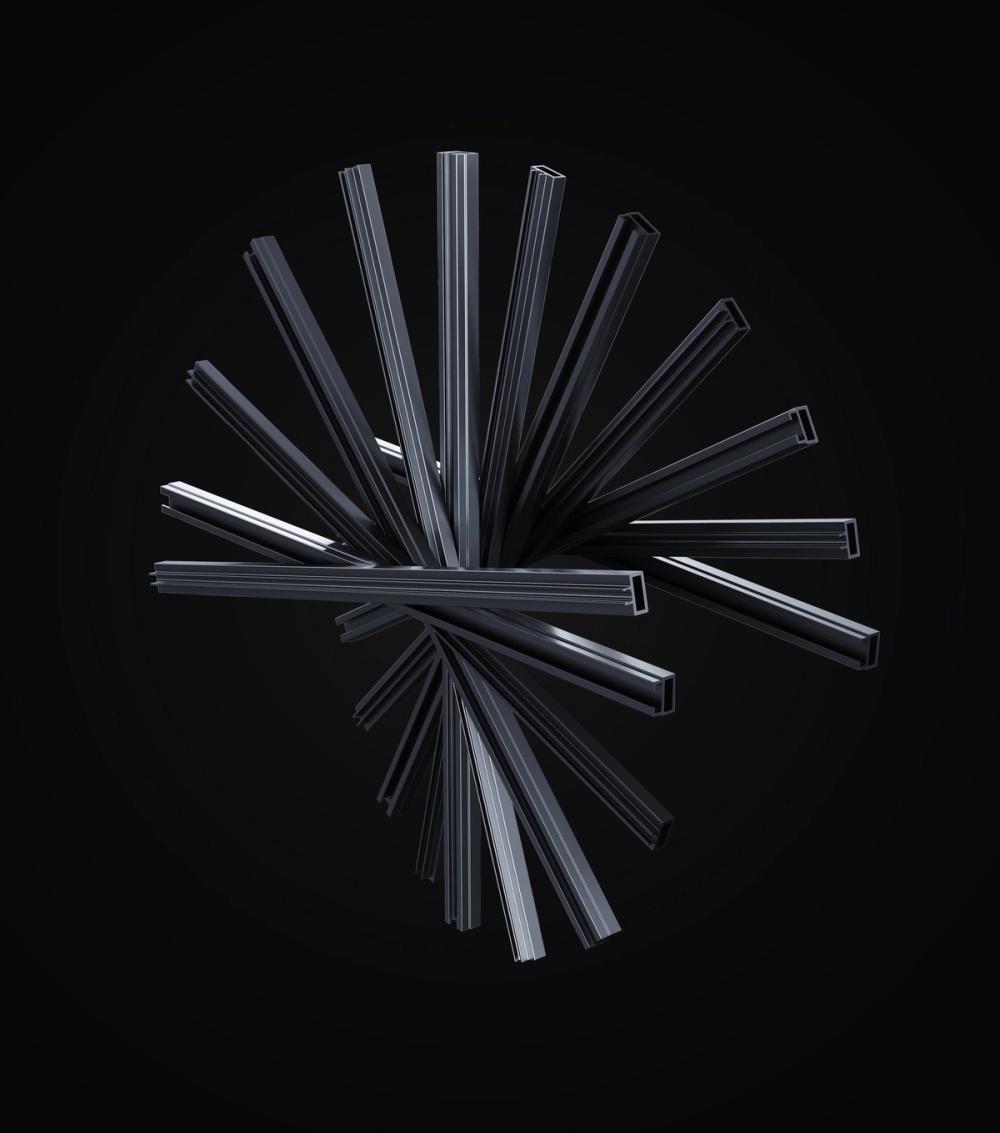
TACTILE and NUMARTIS surfaces are available as infills where the partition should carry pattern or material depth. Multi-layer glass is specified for acoustic and thermal separation where a room genuinely needs it. Finishes on the aluminium profiles come in matt, metallic, and earthy wood tones.
Paloma shower enclosures share the same hardware finish vocabulary, so a bathroom partition and its enclosure can be specified from a single material language.
SHOJI system specifications
| Parameter | Detail |
|---|---|
| Profile alloy | T6-6063 aluminium |
| Profile wall thickness | 3.5 mm |
| Maximum panel height | 4200 mm |
| Profile families | Shoji, Shogun, Suki |
| Grid designs | Ligne, Quadra, Rise, Arc, ArcPro |
| Configurations | Fixed screen, single sliding, synchro sliding, telescopic, dual-hinge, sliding + swing |
| Access options | Manual handle, digital fingerprint, motorised, sensor |
| Track concealment | Ceiling groove (false ceiling) or pelmet (no groove) |
| Glass options | Extra-toughened clear, fluted, Masterline, tinted, fabric-laminated, metal-mesh-laminated, Tactile, Numartis, multi-layer |
| Profile finishes | Matt, metallic, earthy wood tones |
| Lead time after 50% advance | 6–8 weeks |
| Payment structure | 50% advance · 40% · 10% before handover |
SUKI, SHOJI Classic, or SHOGUN
| SUKI | SHOJI Classic | SHOGUN | |
|---|---|---|---|
| Reads as | Minimal — the slimmest visible frame | Balanced — the original grid proportion | Dual-tone — frame and infill read as two materials |
| Typical setting | Residential living, walk-in wardrobes, home offices | Hotel suites, corporate offices, boardrooms | Private dining, hospitality, high-specification showrooms |
| Grid designs available | Ligne, Quadra, Rise, Arc, ArcPro | Ligne, Quadra, Rise, Arc, ArcPro | Ligne, Quadra, Rise, Arc, ArcPro |
| Configurations | Fixed, single sliding, slide & fold | Fixed, single sliding, synchro, telescopic | Fixed, single sliding, dual-hinge, sliding + swing |
| Motorised option | Yes | Yes | Yes |
| Fingerprint access | Yes | Yes | Yes |
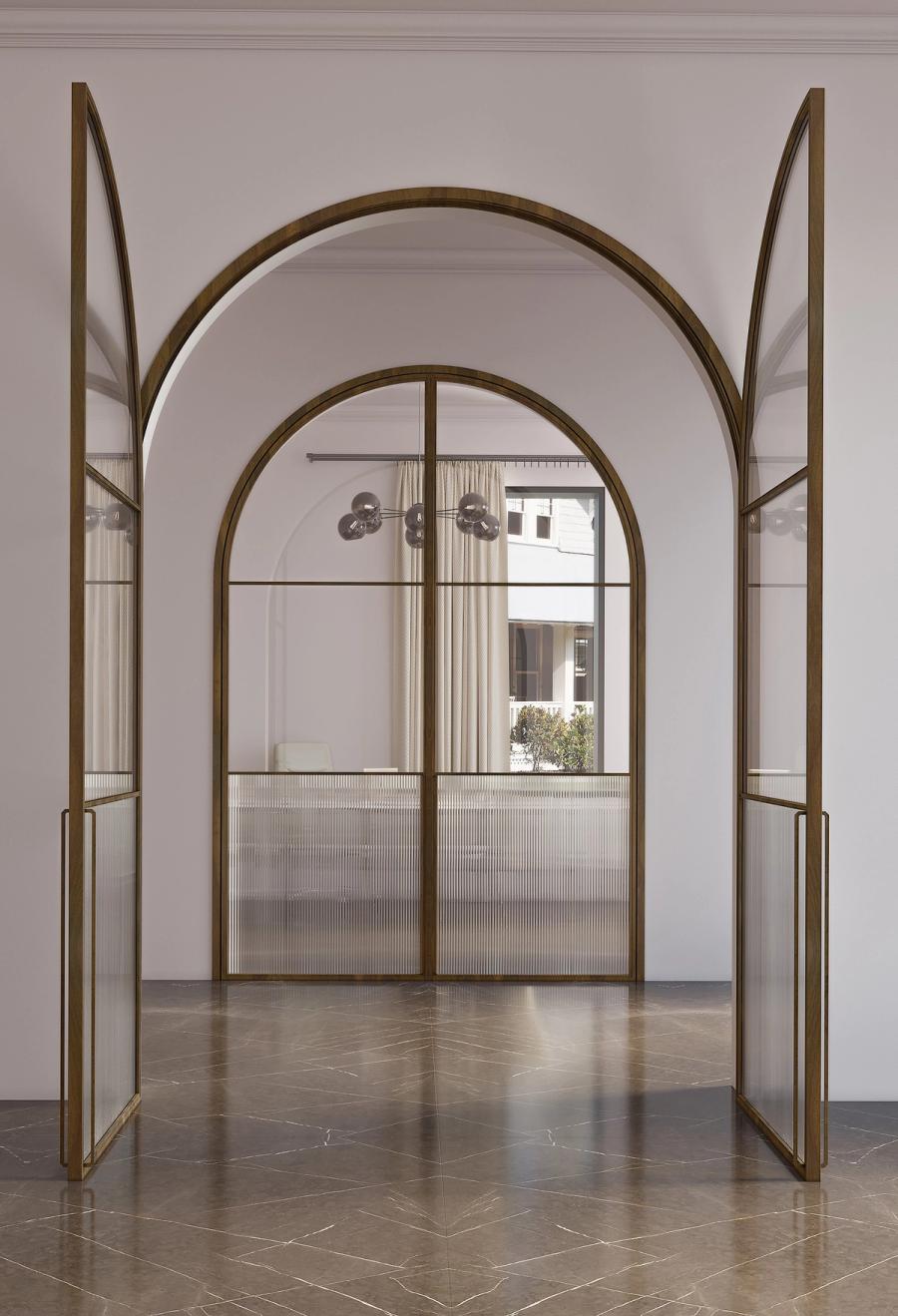
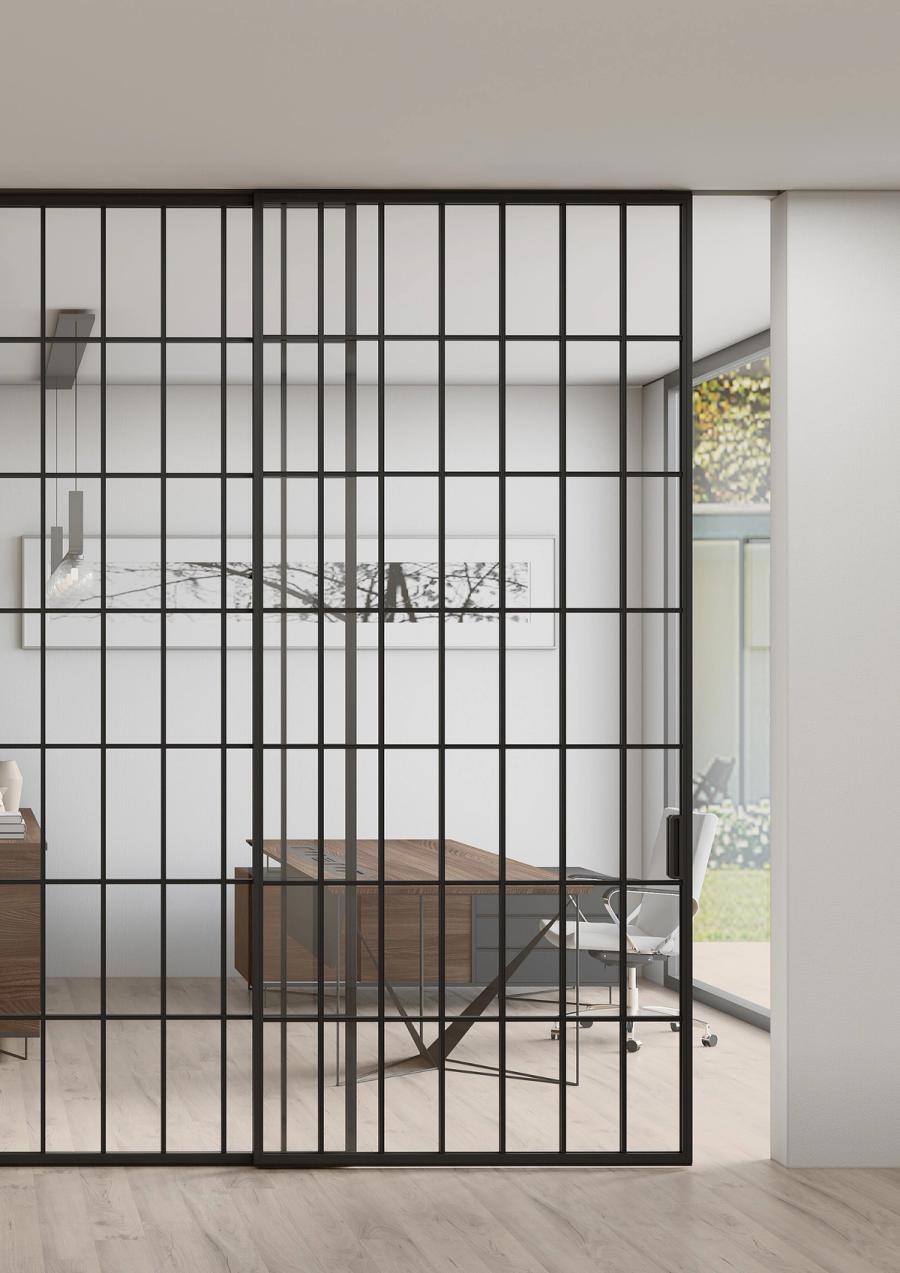
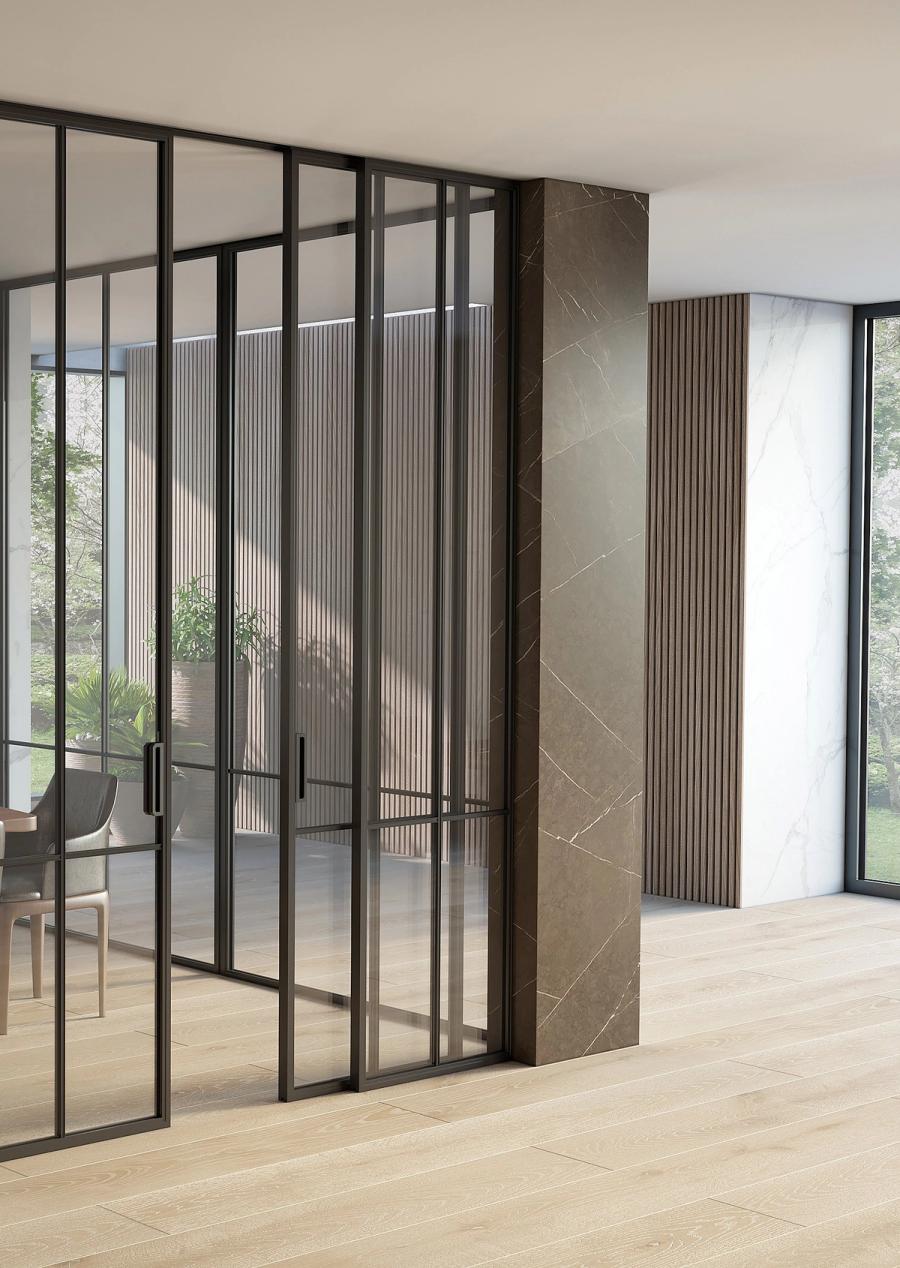
Where SHOJI is specified
Before you specify
- What does 'slim partitions' mean in practice — how thin is the SHOJI profile?
- The SHOJI aluminium profiles are extruded from T6-6063 alloy with a 3.5 mm wall thickness. At any normal viewing distance the frame recedes and the glass reads as the partition. The SUKI family is the slimmest of the three profile families.
- Can SHOJI slim partitions reach floor to ceiling?
- Yes. The system is specified up to 4200 mm in height. Where a false ceiling is available, the top track is grooved into it and nothing is visible above the panel. Where no groove exists, a slim pelmet covers the track.
- Are motorised slim partitions available, and does the motor change the profile dimensions?
- Motorised operation is available across all three profile families. The motor sits concealed inside the track — it does not change the profile width, the glass specification, or the grid design. The partition looks identical whether it is manual or motorised.
- How long does installation take and what is the payment structure?
- After the 50% advance payment, NUMAEX hands over between 6 and 8 weeks. The payment structure is 50% advance, then 40%, then 10% before handover.
Every SHOJI partition is made to the project.
Opening size, ceiling condition, glass choice, grid, access method — all specified before a profile is cut. Send us the drawings or bring us the space.